Showing posts with label Education. Show all posts

Saturday, 13 February 2016

Journal # 9: Transforming the comsumerist culture

(Again, this was written in 1993.)


Gustavo Gutierrez has said that there will never be a revolution in Latin America if religion is not incorporated as part of that process. Thomas Berry is convinced that there will never be a transformation of Western civilization toward a sustainable economy if we do not develop a positive ecozoic spirituality. I do not believe that any serious attempt to transform Western civilization towards a sustainable ecozoic economy, rooted in an ecozoic consciousness and spirituality, can by-pass the presence of the Roman Catholic Church as an institution that includes one-fourth of the world’s population as members and that both historically and in contemporary global terms embodies the cultural foundation of Western civilization, its values and its underlying “mythology.” [Today I would need to add something about the role of Indigenous cultures - and I will turn to that in coming days.] In the Catholic Church, it is the local parish that is the sociological foundation stone. Local parishes have one significant advantage. They have a very local geographically based focus. And there is no place on earth that does not have “its parish.” Thus local parishes can provide a setting for reaching a good portion of the population with an education for the ecozoic age. It is estimated that approximately 20% of the population of Canada attends Mass at a Roman Catholic parish every Sunday. While the percentage in countries like Peru is much lower [as also in Quebec] , my experience has been that parishes have a way of being present in the kind of communities that exist in Latin America in a way that, even though few may attend Mass on a regular basis, the parish can have a direct influence on life in the entire community. Obviously the educational effort will run up against many odds, many of them reinforced by the very doctrines and institutional structures of the Church itself.  This does not mean there are not “openings” or “spaces” where education can begin and proceed.
What I am calling for (and I am not alone) is nothing less than another and different “Copernican revolution” that would, this time, not be in relation to the Ptolemaic world but in contrast to the absence of cosmology in the modern, scientific, technological world. It will be a cosmology that reinstates the Earth as the central focus of our cosmology and gives that cosmology both a practical role in our life cycles and a spiritual place in our relationship with God. Earth will not be just a “resource” to dominate but a living organism of which we, as humans, are a part. God-language will ake on a more creation-centred perspective in which creation is understood as an unfolding process of the emergence of every new and divergent life forms. Humans will be understood as the conscience of the Earth, called to responsibility for it and to live in harmony with it. Redemption will be seen not as a salvation out of the earth but rather as a gift of healing of what we have done to the Earth and an invitation to share responsibility for that healing. Society will be seen as a challenge to live in partnership with one another and the earth. One of the advantages of working in the context of the Roman Catholic Church (and, in that context, looking for the cracks in the wall that can give us an entry-point) is that, despite the wholesale capitulation to much of modern competitive, anthropocentric perspectives, the parish has retained more contact with medieval cosmology than most other modern institutions.
[I go on to talk about this in terms of conversion which, technically means turning around: in this case to old wisdoms.]

Saturday, 23 November 2013

La pensée de Thomas Berry


Voici le texte d'une conférence que j'ai donné dernièrement à Montréal. Il s'agit de présenter au monde francophone la pensée de quelqu'un peu connu dans ce milieu. Je commence avec l'identité fausséé de l'individu dans la culture moderne occidentale. Ensuite je propose un récit développé par Thomas Berry et Brian Swinme. Je conclue avec des implications.  (C'est un peu long !)

(Conférence préparé pour Terre Sacrée, Montréal)
 
16 novembre 2013                                                                 Richard Renshaw


Qui est Thomas Berry ?

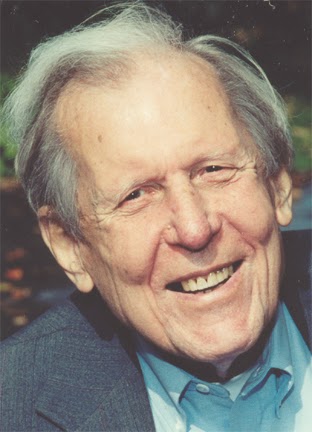
   Thomas Berry est né en 1914 et est décédé en 2009 à Greensboro, en Caroline du Nord. Il s’est identifié comme historien culturel, et souvent il se présentait comme un géologien. Thomas Berry était un prêtre catholique romain de la congrégation des Passionnistes (un groupe semi-contemplatif). Sa pensée s’inspire, entre autres, d’un regard critique sur l’œuvre de Teillard de Chardin. À une certaine époque, il a été président de l’Association Teillard des États-Unis. Il a vécu en Chine et avait une vaste compréhension des traditions religieuses de l’Asie incluant l’hindouisme, le bouddhisme, le taoïsme et surtout le confucianisme.  Aujourd’hui, ses idées sont largement répandues parmi les intellectuels dans beaucoup de domaines et font l’objet d’une acceptation de plus en plus large.  Son livre le plus important et le plus influent, The Dream of the Earth (Le rêve de la terre) a été publié par le Sierra Club en 1988.  (Plus tard, il a collaboré avec Brian Swimme à la publication de The Universe Story (Le récit de l’univers).  D’autres publications incluent The Great Work (La grande œuvre), The Sacred Universe (L’univers sacré) et Evening Thoughts (Pensées du soir).  Il est intéressant de noter que Thomas Berry entre rarement en débat avec des auteurs contemporains (bien qu’il critique souvent les penseurs classiques).  Il rassemble plutôt les idées de beaucoup d’écrivains contemporains et les incorpore dans sa proposition.  Ce groupe inclut des gens comme Lynn Margulis, Carl Sagan, Theodore Rozsak et beaucoup d’autres.

Tuesday, 1 January 2013

The Great Plague of the 21st Century

I warn you that the following is not a glowing report of hopes for the future grounded in New Year optimism. It is, in fact, rather apocalyptic.. In any case, what I say here needs to be said and even repeated.


Found at http://hoocher.com/Charles_II
_of_England/Charles_II_of_England.htm
    A strong link exists, it seems to me, between the growing inequality in the economic world (where relatively few individuals now control the majority of the world’s economy) and the obvious crisis for humanity represented by the rapidly advancing phenomenon of climate change.  At the same time, it is important to underline from the start that climate change does not represent a crisis for the planet. Earth is quite capable of dealing with the impact of the various devastations posed by human economic and military adventures. It will adapt and continue to foster life. More than that, Earth will deal with the impact of human presence as it does with any other extreme phenomenon by eliminating the cause. It is humans who are in crisis of extermination. Moreover, I am convinced that the wealthy and powerful of this world are, consciously or subconsciously, aware of this and have, for a long time now, been taking measures to deal with it in their own way.      This tiny but privileged group is aware that the current economic and political trends are suicidal and so, true to their nature as controllers and dominators, have determined to make sure that they, at least -- if no others -- will survive. They have confidence that their immense economic and political leverage will assure that, when push comes to shove and when the economic, geophysical and political structures fall into chaos, they will be able to provide a “bubble” to protect themselves. Even under the direst scientific predictions, about 10% of the population should be able to survive. They want to make sure that they are included. Theirs is a huge gamble but, as a group they are the ultimate gamblers.
     This tiny group of hugely influential individuals believe in their privileged capacity to surround themselves with the security provided by gated communities, military and paramilitary protection as well as all the infrastructures to assure that they need not worry about anything that happens to the planet. While I do not believe there is an overt conspiracy here, I do believe that their reliance on the power to control leads them inevitably toward a logic that leads to a conviction that power over economic and political process is the path to ultimate security. There is also a corollary: To hell with the rest of the world!  What is worse, I also think there is a chance that may be right.
     There is still another layer to this: Much of the world, especially the Western world, believes this also and, even though they are excluded from the securities provided to the rich and powerful, they are convinced that, given the right circumstances, they will be able to assure their place inside the bubble. Instinctively they realise that those few super-rich individuals will need people around them who sustain and support their survival. They want to be part of that bubble when it arrives. For this reason, most of the population of North America and Europe is ready to “go along with the system” and hope that the bubble will be large enough to cover them. As a result, the political and economic process continues regardless of its obvious consequences for vast regions of the world. The greatest danger to the survival of humanity lies with this internalized subjugation within the minds of the vast majority of the population. Moreover, the educational and media industries reinforce this internalized mentality day after day.
     The picture painted here is quite sombre and could easily lead to despair about the future and our ability to shape it for the good of all. We are in a time when faith and hope are faced with a darkness unlike anything society has known in past centuries -- except perhaps in Europe during the time of the Great Plague.
    In fact the experience of the Great Plague in Europe is worth exploring. At that time people experienced a terrible devastation that took tens of millions of lives without understanding where it was coming from or why. It took decades of persistent investigation to pinpoint the source of the problem, then more decades to convince society to deal with it. In the meantime the devastation continued. What is hopeful in all this is that eventually reason prevailed and, while it was the poor who suffered the brunt of the disaster, eventually the process wore itself out and people began to organize to protect society as a whole from the menace. There is a difference however, the plague was an epidemic. Epidemics have a life, it would seem, of about twenty years. By then the immune has adapted, to a large extent, to resist the attack. Unfortunately, in our current situation, there does not appear to be any immune adaptation foreseeable.
    If the worst scenario is to be avoided, it won’t happen without considerable effort and enormous losses along the way. We have an option before us: confide in the richest and most powerful to protect us, or dislodge the destructive trend -- against all odds, with a faith and courage that is not diminished by the enormity of the odds.

Friday, 21 September 2012

Update on the Student Struggle

Over the past six months, I have posted several items regarding the student struggle to oppose a government decision to raise post-secondary tuition significantly. There have been important developments in this struggle during the past three weeks. For those who may not have been in a position to follow these, I offer a brief summary:

The Liberal Government decided to call an election for September 4. They counted on their first stance against the students as a rallying point for much of the population. (They also wanted to assure an election before the results of the Charbonneau Commission on corruption issued its report next Spring.)  Well, the government lost the election, the leader lost his seat. The Partie Québécois was elected and swore in its Cabinet on September 19. The new Prime Minister (Pauline Marois) then held a press conference in which she announced the following
‎1)  The tuition hike is annuled.
2) Law 12 that limited civil liberties is abrogated.
3) A moratorium on any exploration or expolitation of shall gas is put in place. The minister of natural resources also announced that she does not see any way in which current technology could be used.à to safely extract shale gas.
4) A $200 tax on health services ($400 for a family) is annulled. 

5)  The nuclear plan Gentilly-2 will be closed.
 
It must however be added that this is a minority government whose longivity is seriously in question.  In the meantim, we breathe deeply !!


Wednesday, 22 August 2012

7th Mass March in Montreal

August 22, 2012. Photo by Laurie Lee
For the last seven months, a massive march march every 22nd in support of the students and in protest agasint the repressive Law 78 has brought together tens of thousands of local citizens of all ages.  Today, August 22 is no exception.


For those who wish to keep more informed of this long Quebec Springtime and the elections it has provoked, you might want to visit http://www.bloquonslahausse.com/

This and the following references are all in French -- of course !


Another site would be that of the Têtes Blances on facebook (http://www.facebook.com/jeanfrancois.blais2#!/groups/114942725311925/) and of the APACS. Here is the reference to the one in my neighbourhood: http://www.facebook.com/jeanfrancois.blais2#!/groups/assembleerpp/ .

Please note that the facebook sites are not intended to provide general information but rather exchanges on a daily basis focused on concrete local activities. These are active pages and entry points for following the student movement. .

Thursday, 12 July 2012

Building a Future from the Grassrots up

    More and more the difference between struggles in the North and the South is evident.  For one thing, the peoples of the South, like Aboriginal peoples, struggle not only against what the neoliberal economy brings them, they also struggle, and to a very large extent, to defend the culture they have built over millennia. They defend their language, their traditional way of life, their values and future generations. In the North, the struggles have often been marked by a single-minded attack against what is seen as unjust. The weakness has often been that, once the particular difficulty has been overcome (work hours, pensions, salary gains, etc.), everyone settled down once again to their regular routine within the society that was theirs. And the manipulation and the corruption continued unabated.
Occupy the Heart of the Island, July 2012
     Perhaps, in some way that is why the case of Quebec (and various other minorities around the world) is somewhat different. The Francophone people in Quebec , like Aboriginal peoples, have something to defend (the beauty of their land, their language, the particular values that were entrenched in the Quiet Revolution of the 1970s). And yet, the majority in Quebec have been integrated into the values and lifestyle of the neoliberal economy and are all too willing to trust their social and political institutions to serve their needs -- much as is in the case for the Rest of Canada.
    There may now be a change at work. There is scepticism about the political machinery and its leaders; there is disgust at the way the financial world is functioning; there is a growing rejection of continuous cuts to social services; development plans erode the land itself; we witness a surrender of education to market interests; the French language is eroded in public places. These issues have drawn hundreds of thousands into the streets in recent month to defend what they have build and to demand accountability from their government. It remains to be seen whether that energy can get translated into a genuine cry for fundamental change.
Occupy the Place of the People, October, 2011
     The strength of the movement lies in its grassroots organizations, and here as elsewhere those organizations have tended to be dependent on financial support from various levels of government. What is needed is the creation of a broad grassroots economic and political life that is independent of government and not at all beholden to it. Here in Quebec we are at the beginning of this process.
    Very likely an election will be called within a month (to be held in early September). Already the pundits are saying that much depends on whether the students (who have led the charge since the beginning of the Maple Springtime this year) will translate their protest into political action by registering en masse and going out to vote. What is important is that, while no one thinks that a change of government will resolve the underlying issues, a more responsive government might be in a position to catalyze the grassroots energy into daring fundamental changes to our political and economic life.

Sunday, 27 May 2012

Petite-Patrie

   I live in a neighbourhood right in the middle of Montreal Island. Last night 10,000 people marched through the streets of the neighbourhood--as they have every night for the last week--banging their pots. We were one of a multitude of neighborhoods in Montreal that saw marches. Moreover the phenomenon has spread throughout the Quebec territory. Why do they do this?  The answer is not simple.
   Part of it is support for the student movement that has been on strike for more than 3 months now after the government of Quebec announced it would raise tuition and the students said that would exclude the poor. Part of it is also in response to the government's attempt to temper the street activity by setting rules with heavy penalties for non-compliance. Part also, without any doubt, is a more general reaction to the current Quebec government that is riddled with corruption, pressing ahead with huge resource extraction projects and cutting support to social services. Indirectly, this popular anger is also fed by the arrogance of the federal government, which is enacting a series of legislative changes that crack down on youth crime (even though it is decreasing) and on  immigrants without papers while making drastic cuts to charities, international aid and social services. One traditional symbol among the people here is the rooster (Coq). People seems to have come the conclusion that they are being plucked to the bone (like the famous allouette) and they have had enough.
   As the marches continue, the people are beginning to realize that, in addition to marching through the streets, there is need for stronger organizations. Citizens groups are springing up to take up the issues, to get those in all the political parties to join together to change this: to abolish the infamous law 78 and to support the students. A public inquiry has begun into government corruption; The list goes on.
   This is a unique and historic moment in Quebec history. Something that has not been seen since the time of the Quiet Revolution of the 1960s when Quebec took its destiny into its own hands. It is interesting that the official motto of Quebec is "I remember."  And indeed!

Thursday, 24 May 2012

The Government is Teetering


   Since world news is being made here in Montreal, I suppose I should say something--briefly.
May 22, 2012 - estimated 300,000
   Last Tuesday, the student associations, the union federations and the community organizations called for a march downtown. At least 300,000 showed up: a historical first for Quebec. It was a joyous festive moment with all generations present. It was also illegal. Law 78, passed a few days earlier, was supposed to calm things down by suspending courses until August and putting a lid on demonstrations. However, people were outraged that the police had to be informed of any demonstration in advance along with the itinerary. For the monster march, the people did not follow the itinerary indicated. Anyway, we made our way to Park Lafontaine chanting slogans and generally enjoying a beautiful day. Later in the evening the police cracked down and there were many arrests.
   That evening at precisely 8 PM, pots started banging on my little residential street. The racket grew. Then people gathered for a while at the corner making quite a lot of noise. Finally we went to the main intersection where there were about four groups of 50 people (one on each corner since the law prohibits anything over 50 people without police approval). As the traffick lights changed we crossed the intersection and traded corners. It went on for a couple of hours.
Le Devoir, May 24, 2012
   Yesterday, Wednesday, the banging of pots started again at 8 PM but this time there were far more people at the intersection (perhaps 300).  It made the front page of the papers this morning.   Later in the evening, the police cracked down on protesters downtown and arrested over 500.  It doesn’t seem to have dampened spirits.
   Tonight, the same ritual except that there were at least 500 people at the intersection and at one point we met a march of at least 1000 people coming down the street toward us. Almost everyone joined in and we spent a good hour marching through the streets of our little neighbourhood of Montreal. We were in the end perhaps 2000. I left as the marchers moved south toward the center of town.  The same thing is happening in at least 60 other neighbourhoods throughout the city and in several other cities throughout Quebec.
   The initial idea was to offer support to the students in their efforts to settle their dispute with the government. (The Minister responsible for education resigned her post and her seat in the Assembly-- quite politics altogether. Now the chief political advisor to our head of government (Jean Charest) has also resigned. In the minds of most people it would seem that the Law 78 was the last straw and many will not be satisfied until elections are called and the government itself is changed. Few people support it at this point; there have been too many scandals and crazy development projects involving billions of dollars.
   Banging pots is such a simple thing. Anybody can stand at their door and do it. Parents bring along their kids who are happy to bang on their pots. The elderly join in from their apartments. It is a simple way that finally everyone can have a voice and it is certainly bringing our neighbourhoods to life.  Such a simple thing and it is tumbling the governement!

Comments would be more than welcome.

Friday, 2 March 2012

Student General Strike (Quebec)

The youth mouvement today is no small matter, check out this video about the Quebec student strike against tuiition hikes:  jeunesse d'aujourd'hui   Currently 100,000 students are on strike.

Please note, that the student struggle is not just about students being able to pay a tuitition hike but much more about the place of education in society and how it is made available to everyone and not just to the rich and the children of the rich;

Tuesday, 7 June 2011

Popular Education

Yesterday I attended a presentation on the situation in Colombia. It was part of a monthly series of popular education events to inform and mobilize people in Montreal – especially youth.  The presentation led me to reflect on what people today understand by “popular education.”  I attend of a lot of events, most of them with a speaker or a film and then questions.  It is not clear to me how this fits into popular education.
First of all, the term includes “popular,” that is to say, “of the people.”  Here we are talking about what has classically been termed the “option for the poor.” By the poor I mean to refer to those who have difficulty meeting their basic human needs. It does not mean those with limited revenue, though in many circumstances they may be poor. The distinction is important in many contexts around the world. Moreover, I have not often seen popular education work well with professionals or with people from the middle class. They have their own interests and their reality is not one that requires the process popular education offers. What can happen however, is that people from this milieu can be brought to recognize that their grasp of reality is very limited and that there is a larger reality that they need to understand and deal with. A good process can lead to stronger solidarity with the poor.  In that sense it is positive to work with those groups using some of the approach of popular education. It needs also to be said that in the current global setting, there are very few people who, at one level or another, are not struggling to meet basic needs, especially if one includes among those needs some participation in social, economic, cultural and political decisions that affect them. More and more people are also finding that meeting their need for adequate food and housing is becoming a challenge especially if they look for healthy food and healthy communities.
Secondly, by popular education we mean education and not information. Much of what goes as education is really the pouring of information into the heads of people with the assumption that, miraculously, that is going to change something in them or the world. Education is a very different process. Education means comprehending, in the original sense, of “grasping,” getting a hold on one`s reality, one’s own reality, being able to name it in a way that gives one a hold on it.
In the tradition of popular education it is assumed, first of all, that the poor can be educated, that they can become the protagonists of their own lives.  This is the meaning of “empowerment:” being able to take hold of one’s reality and transform it.  The process of education is one then of getting hold of the basic process that enables people to meet their own needs and also to get hold of the processes that are preventing that from happening. It is a question of learning “critical analysis,” that is to say learning to understand the structures and processes of power at work in one’s own community – for life or for death and then learning the ways to deal with those structures and processes.
Classically, in popular education, it is assumed that ordinary people, poor people, people who have difficulty meeting their needs have within them the elements necessary to do all that but that a piece of work is needed to bring it out, to articulate it, to put words to it, to name it. Thus an educator is not primarily someone who provides information but one who enables people to reflect on their own reality in a way that they themselves discover ways to name the powers at work there. It is a reality they know already and that they know best. For that reason an educator is primarily a facilitator.
   For background on popular education we need to go back to the classical sources: John Dewey who insisted that education was for everyone and that it was a matter of puting some order into our ideas; the Frankfurt School, a philosophical movement that develooped the concept of critical analysis; and then finally Paulo Freire, who put it all together in a way that defined what popular education means today.