
 |
| 2012 - Delegation to Malarctic gold mine |
Sunday, 17 January 2016
Journal #4: Women in the workplace


Thursday, 14 January 2016
Journal #3: The World of the Indio
(Continuation of the Journal begun in previous entries. The text dates from the early 1990s.)
I got my hands on José María Arguedas' novel Los Rios Profundos, 1973 .(His only novel translated and published in English: The Deep Rivers.) How many times have I read it? Yet it always drives me back into a re-examination of my soul. Young Ernesto sees the world through the "magincal" eyes of a child and of his native culture. He, like Arguedas himself , is a bridge between Western and Aboriginal cultures. (He was an anthropologist by formation, son of a lawyer but essential raised by a Quechua family while his father travelled.) Everything is alive and speaks of the stories of the people, especially the walls of Cuzco and their "living stones" - puk-tik: "stones of boiling blood." The Maria Angela of the Cathedral rings out its sad tones because it carries the blood of the Indians. The magical zumbayllu (a wooden top that hums as its spins) that sends out its cry and can be heard by his father as a voice of pleading from a small child across the valleys and mountains. These may be the imaginings of a child but they touch deep chords of Quechua cosmology and provoke profound insights into the reality of our place in the universe. For Ernesto, all is alive, all speaks, all has a stgory to tell, all responds to the pain of the "indio."
 |
| Wall in Cuzco - 12 angle stone |
Wednesday, 13 January 2016
Journal #2: Sustainability
(Continuation of the Journal begun in the previous entry. The text dates from the early 1990s.)
When I was born World War II raged. At the end there was a promise of a new age of prosperity and peace through technology and science. And through the fifties and then the sixties, it seemd to deliver. Lester Pearson (then Prime Minister of Canada) offered "Atoms for Peace." Among the very first books I ever read in the local library was a simple explanation of atomic theory. I learned how reactors worked. I became fascinated with science. The green revolution promised prosperity for poor countries. The United nations, which I visited when I was 15, promised an end to war between Nations. Kennedy came along, with Martin Lucher King, and we dreamed of racial equality (in the U.S.A.). And then ... it began to unravel. And we began to recognize the limiations and not only the limitation but we began to take stock of the dimensions of resistance (from privileged interests, from the transnationals, from governments and the media, from the military, even from the rigid attitudes of the poor who had bought the dream - and from the Church. It was not going to be either easy or quick. The entire structure had to be dismantled and reconstructed. Maybe we'd never see more than some signs of utopia in our own lifetime. ...
The struggle for a sustainable way of living, a sustainable economy and politics involves a careful mapping out of a new way of understanding fundamental human ventures. It means a new way of looking at science and technology, of the secular and the rleigious. It is a question of revisioning, but it is also a quesstion of evoling a strategy of moving from where we are now. ...
Chicken Little cried, "The heavens are falling, the heavens are falling." And indeed they are. The world will end. I have seen the world end several times in my life. ... But we learn to survive the crises and the deaths. Each provides a challenge and also an opportunity.
 |
| World March of Women 2015 - Quebec |
The struggle for a sustainable way of living, a sustainable economy and politics involves a careful mapping out of a new way of understanding fundamental human ventures. It means a new way of looking at science and technology, of the secular and the rleigious. It is a question of revisioning, but it is also a quesstion of evoling a strategy of moving from where we are now. ...
Chicken Little cried, "The heavens are falling, the heavens are falling." And indeed they are. The world will end. I have seen the world end several times in my life. ... But we learn to survive the crises and the deaths. Each provides a challenge and also an opportunity.
Monday, 11 January 2016
Journal #1: State of the Planet
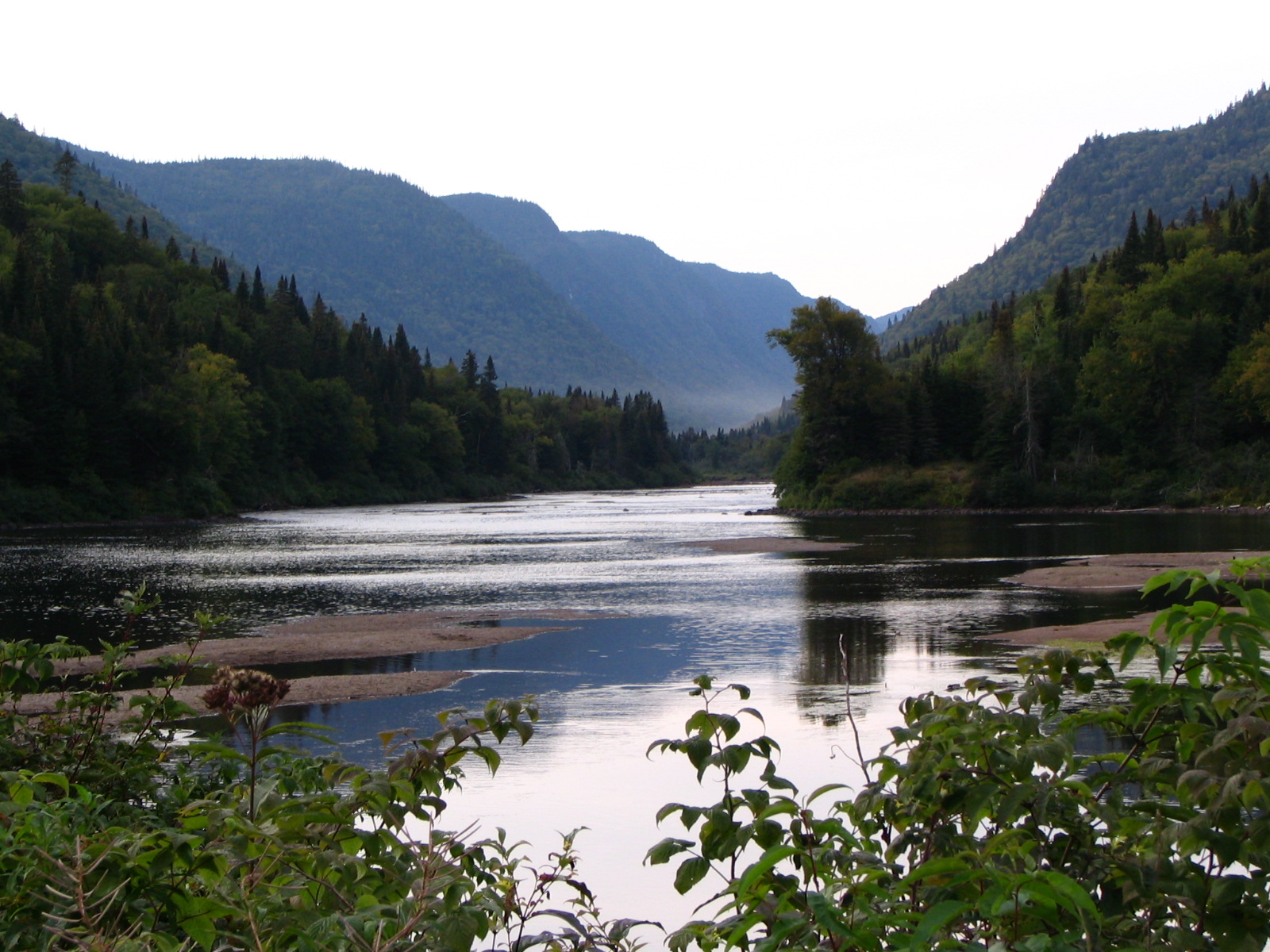 |
| Quebec lake |
My initial reaction to rereading the "state of the planet" is one of disbelief. It can't really be all that bad. After all, twenty years ago, the scientists were telling us that the worlds" resources would be exhausted by the end of the century. (Dennis Pirages and Paul Ehrlick, Ark II,W.H. Freeman & Co, 1974). et we seem to be going on with "business as usual." Then I listen to a CBC news report a couple of days ago: the last virgin forest in North America is opened to logging, the entire fishing industry of Newsfoundland (Newfoundland!!) has to be dimantled, there is a hold over Antarctica as big as the U.S.A. All in one news report.
The planet may be able to regenerate from our destructiveness - though there is no assurance of that. The critical issue for us as humans, is that we may not survive the process! When I read about how the CFC's operate in the stratosphere, it is frightening. We don't really know what we have unleashed!
...
Can we let go of the addiction to privilege? Can the Third World free itself from the encroaching enslavement to the same dream? Can we return to an earlier vision of our place in the scheme of things? - which is never really just a return but a reinventing of the old in an entirely new and transformed setting. (to be continued...)
Subscribe to:
Posts (Atom)